

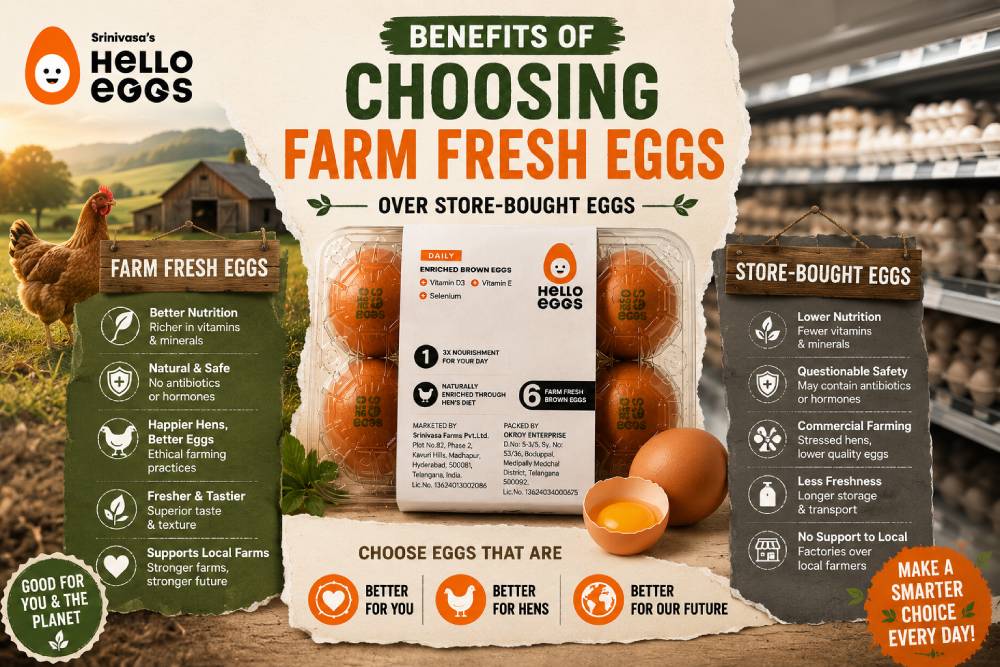
Eggs are one of the most widely consumed foods in the world. Yet many shoppers spend more time choosing their coffee brand than thinking about where their eggs come from.
The truth is that the journey from farm to plate can influence freshness, taste, and overall eating experience. That’s why interest in farm fresh eggs in Hyderabad and other growing urban markets has increased significantly in recent years.
But are farm fresh eggs really different from regular store-bought eggs? Let’s find out.
What Are Farm Fresh Eggs?
Farm fresh eggs generally refer to eggs that move through a shorter supply chain between production and consumption.
Because they spend less time in storage and transportation, these eggs often reach consumers sooner after being laid.
Freshness is the primary distinction-not necessarily appearance.
Why Freshness Matters
Imagine slicing into bread that was baked an hour ago versus bread that has spent several days on a shelf.
Eggs work similarly.
Better Texture
Fresh eggs tend to have firmer whites and more rounded yolks, making them particularly appealing for cooking and baking.
Improved Cooking Performance
Whether you’re poaching, frying, or boiling, fresher eggs often hold their shape better.
Better Eating Experience
Many consumers report richer taste and texture when eggs are consumed closer to their collection date.
Nutritional Value Remains Strong
Eggs are naturally rich in:
- High-quality protein
- Choline
- Vitamin B12
- Selenium
- Vitamin A
- Essential amino acids
The fresher the egg, the better it can preserve certain quality characteristics that consumers associate with premium eggs.
How Farm Fresh Eggs Reach Your Kitchen Faster
Traditional supply chains may involve:
Farm → Collection Center → Storage → Distribution → Retail → Consumer
Farm-fresh systems often simplify this journey.
Shorter timelines generally mean less waiting before consumption.
For urban consumers, this difference can be especially valuable when purchasing eggs regularly.
Common Myths About Farm Fresh Eggs
Myth 1: Brown Eggs Are Always Better
Shell color depends largely on the breed of the hen and doesn’t automatically indicate superior nutrition.
Myth 2: Bigger Eggs Mean Better Eggs
Size alone doesn’t determine nutritional quality.
Myth 3: Fresh Eggs Look Completely Different
While freshness affects internal quality, many differences are subtle and become noticeable during cooking.
How to Identify Good Farm Fresh Eggs
Look for:
- Clear packing information
- Clean shells
- Proper storage
- Consistent sizing
- Reliable sourcing
Brands that provide transparency about farming practices often make it easier for consumers to evaluate quality.
Why Urban Consumers Are Switching
Modern consumers increasingly want more than basic nutrition.
They want:
- Traceability
- Hygiene
- Consistency
- Freshness
- Confidence in sourcing
As awareness grows, farm fresh eggs are becoming a preferred option among families seeking dependable everyday nutrition.
Farm Fresh Eggs and Daily Wellness
The beauty of eggs lies in their simplicity. They’re versatile, affordable, and easy to include in daily meals.
When freshness is prioritized, consumers often feel more confident about the quality of what they’re eating.
That confidence has become a key reason behind the rise of premium egg categories.
In cities such as Hyderabad, brands like Hello Eggs have helped bring farm-fresh eggs closer to consumers through controlled sourcing, quality-focused handling, and carefully managed distribution systems. Rather than changing what an egg is, the focus is on delivering it fresher, cleaner, and with greater consistency-qualities that matter more than ever in today’s food choices.